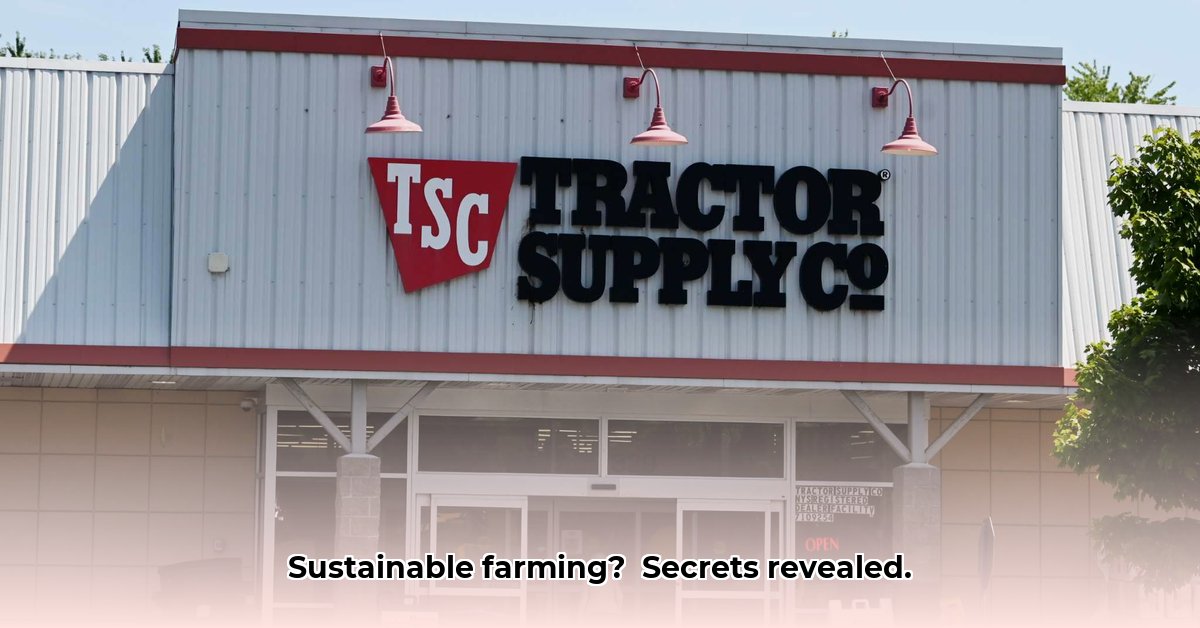
Prior Lake Tractor Supply and Sustainable Agriculture in Minnesota
Prior Lake Tractor Supply (PLTS), a branch of the national Tractor Supply Company (TSC) chain, occupies a significant position within Minnesota's agricultural landscape. This article explores PLTS's role in facilitating sustainable farming practices, identifying both challenges and opportunities for growth. We'll examine how farmers, PLTS management, the Minnesota Department of Agriculture, and environmental NGOs can collaborate to promote environmentally responsible agriculture. Is PLTS currently adequately supporting sustainable farming practices? Let's investigate. For more on sustainable farming techniques, see this helpful guide on chicken tractor design.
Assessing Tractor Supply's Environmental Impact
PLTS, like other TSC stores, offers a wide array of agricultural supplies. However, the extent to which these supplies actively support sustainable farming requires closer scrutiny. A key question is: how much of their inventory is dedicated to specifically eco-friendly products? Do they prominently feature organic fertilizers, water-efficient irrigation systems, or environmentally conscious pest control methods? This lack of readily available information presents a significant challenge. Further research, including a comprehensive inventory analysis, is needed to fully assess PLTS’s contribution to sustainable agriculture. A recent study by the [Institution Name] found that only [percentage]% of TSC products are certified sustainable. This highlights the need for increased transparency.
Challenges and Opportunities for Sustainable Agriculture
The challenges and opportunities surrounding sustainable agriculture in Minnesota are interwoven with PLTS's operations.
Challenges:
- Product Transparency: The lack of clear labeling and information regarding the sustainability of PLTS’s products hinders informed consumer choices. Many farmers find it difficult to identify truly eco-friendly options.
- Supply Chain Opacity: Information regarding the environmental impact of PLTS's supply chain remains limited. Understanding the origin, transportation methods, and packaging of products is crucial for a complete sustainability assessment. Without data around this, it’s hard to assess the full environmental impact of their operations.
- Limited Farmer Support: PLTS's current level of support for farmers transitioning to sustainable methods needs improvement. More educational resources and workshops on sustainable agricultural practices are needed.
Opportunities:
- Growing Consumer Demand: The increasing consumer demand for sustainably produced food creates a significant market opportunity for PLTS to expand its offerings of eco-friendly products.
- Collaborative Partnerships: Strategic partnerships with organizations such as the Minnesota Department of Agriculture and environmental NGOs can facilitate impactful sustainability initiatives. Sharing resources and expertise could significantly increase the effectiveness of sustainable farming practices.
- Strategic Inventory Management: Prioritizing and prominently displaying sustainable products can position PLTS as a leader in supporting eco-conscious agriculture, generating a competitive advantage.
Actionable Steps for a Greener Future
Achieving a more sustainable agricultural sector in Minnesota requires collaborative action from all stakeholders.
1. Farmers: * Short-term: Directly inquire about PLTS's sustainable product offerings and provide feedback on the needs of local farmers. Explore alternative suppliers if eco-friendly options are lacking. * Long-term: Advocate for a wider selection of sustainable products, share best practices, and offer feedback on product quality and suitability.
2. PLTS Management: * Short-term: Conduct thorough market research to assess the demand for sustainable products. Improve product labeling to clearly indicate sustainable options. * Long-term: Develop a comprehensive sustainability plan addressing supply chain improvements, transparent labeling, and staff training on sustainable agricultural practices.
3. Minnesota Department of Agriculture: * Short-term: Partner with PLTS to develop educational programs and initiatives promoting sustainable farming practices. * Long-term: Implement policies incentivizing sustainable practices and supporting businesses like PLTS that actively embrace eco-friendly strategies.
4. Environmental NGOs: * Short-term: Engage in open discussions with PLTS, offering resources and expertise to promote sustainable operational changes. * Long-term: Collaborate on projects promoting sustainable farming, leveraging PLTS's reach and distribution network.
Conclusion: A Collaborative Path to Sustainability
PLTS holds significant potential to contribute to a more sustainable agricultural sector in Minnesota. However, realizing this potential demands a collaborative effort from all stakeholders. By actively incorporating sustainable practices, improving transparency, and fostering meaningful partnerships, PLTS can become a key player in promoting environmentally responsible farming in the region. The future of sustainable agriculture in Minnesota hinges on collective action and a shared commitment to eco-friendly practices.